
Systems Check: 0%

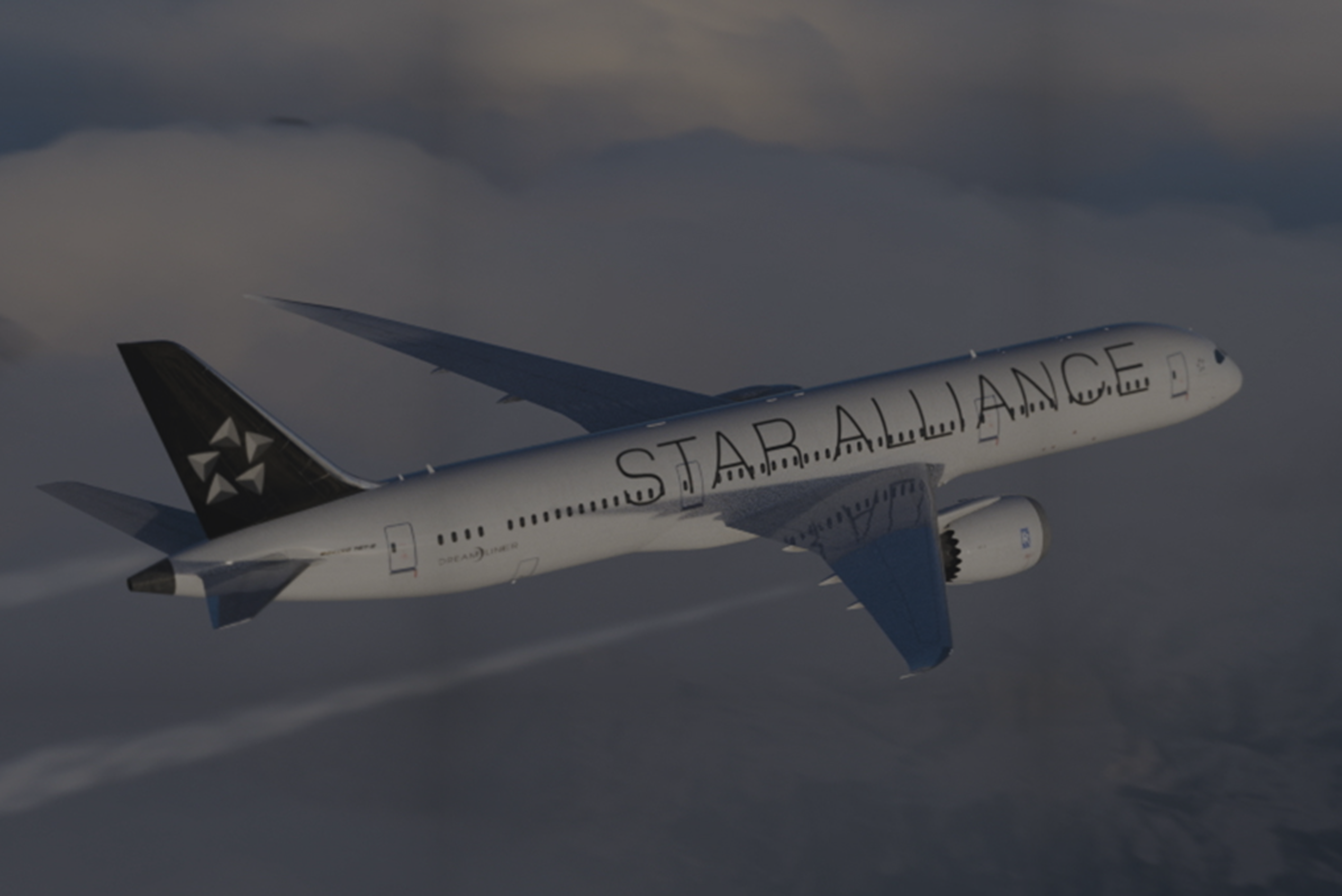
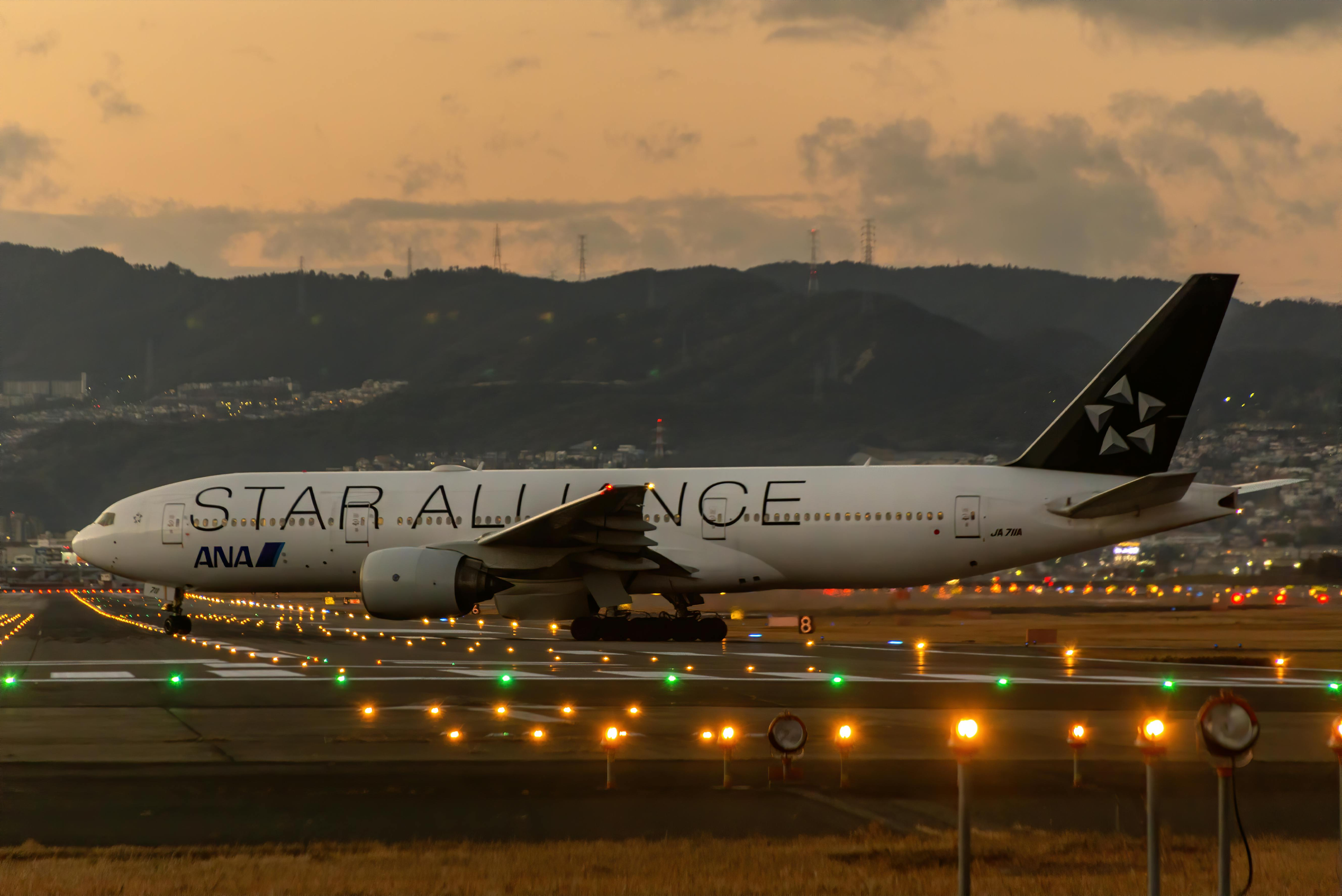
From 737 NG & MAX to A320 and A330, our fleet connects the US with the world.
The alliance currently consists of 25 member airlines (following the departure of SAS and the ongoing integration of ITA Airways). Together, they operate over 5,000 aircraft and serve more than 1,150 airports.
| Member Airline | Primary Region | Key Hubs |
|---|---|---|
| United Airlines | North America | Chicago, Denver, Houston, Newark |
| Lufthansa | Europe | Frankfurt, Munich |
| Air China | Asia-Pacific | Beijing, Chengdu, Shanghai |
| Turkish Airlines | Europe/Asia | Istanbul |
| Air Canada | North America | Toronto, Montreal, Vancouver |
| Singapore Airlines | Asia-Pacific | Singapore Changi |
| ANA (All Nippon) | Asia-Pacific | Tokyo (Haneda/Narita) |
| Ethiopian Airlines | Africa | Addis Ababa |
| Avianca | Latin America | Bogotá |
| Swiss Int'l Air Lines | Europe | Zurich |
Other members include: Aegean, Air India, Air New Zealand, Asiana, Austrian, Brussels Airlines, Copa Airlines, Croatia Airlines, EgyptAir, EVA Air, LOT Polish, Shenzhen Airlines, South African Airways, TAP Air Portugal, and Thai Airways.
The combined fleet is incredibly diverse, ranging from ultra-long-haul widebodies to regional turboprops.
The backbone of the alliance's domestic and regional networks is dominated by two families:
For transcontinental flights, the alliance features some of the most advanced jets in the sky:
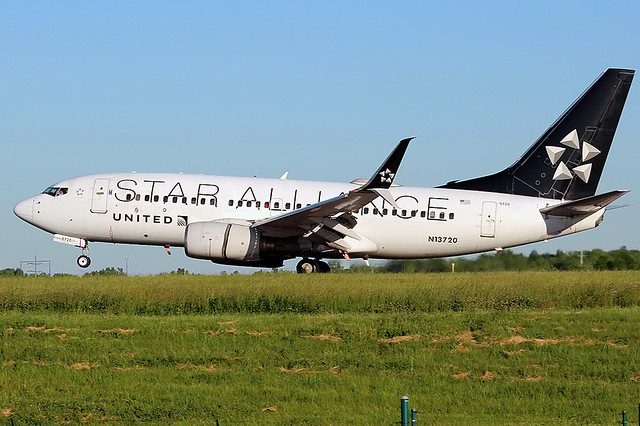
NG • Shortest 737
Introduced in 1998 as the smallest Next-Generation 737, the -600 was the direct replacement for the classic 737-500. With room for about 130 passengers, it found a niche on regional and short-haul routes where capacity mattered less than efficiency. Scandinavian Airlines was one of the largest operators—ideal for thin Nordic and European sectors.
Passengers
130
Range
5,648 km
Cruise
M0.78
Engines
CFM56-7B22
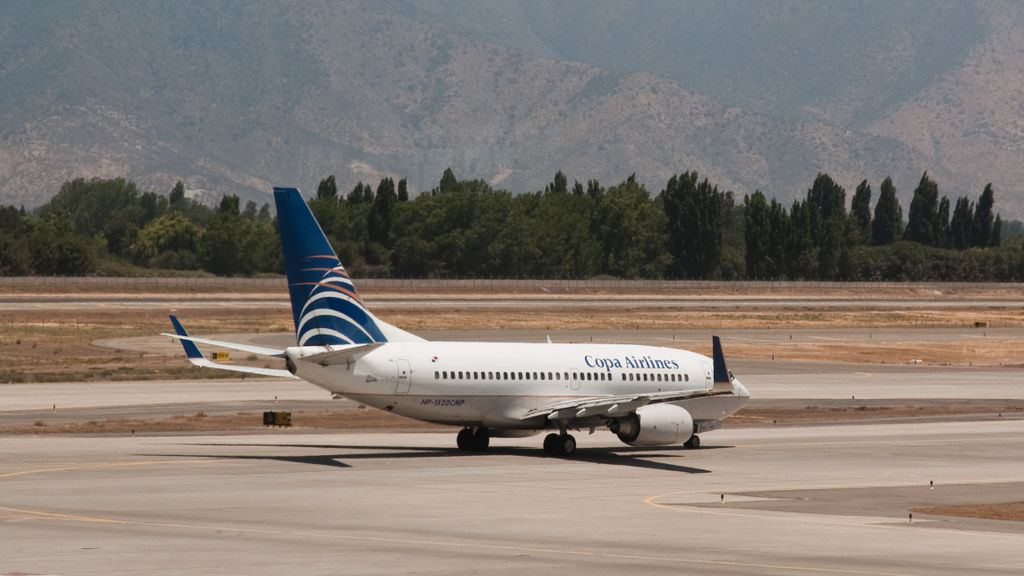
NG • Medium Range
The 737-700 entered service in 1998 and effectively replaced the 737-300. It became a favorite for domestic and thin international routes, with a 6,230 km range that allowed transcontinental US flights. The -700ER variant, launched in 2006, offered extended range for operators like All Nippon Airways, pushing the narrowbody into long-haul markets.
Passengers
126–149
Range
6,230 km
Cruise
M0.78
Engines
CFM56-7B
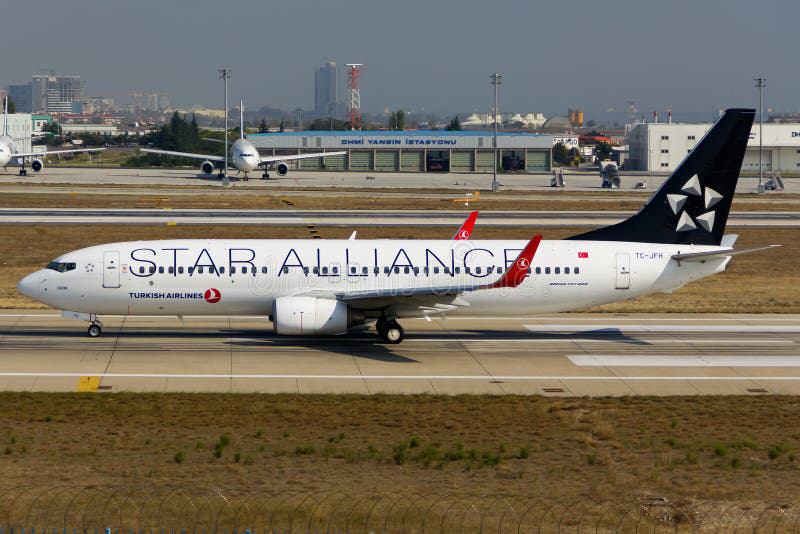
NG • High-Capacity Workhorse
Launched in 1998, the 737-800 quickly became the best-selling 737 NG variant and the backbone of low-cost and traditional carriers alike. With 162–189 seats and 5,765 km range, it defined medium-haul narrowbody operations for two decades. Thousands were built, and it remains one of the most common jetliners in the sky today.
Passengers
162–189
Range
5,765 km
Cruise
M0.78
Engines
CFM56-7B26
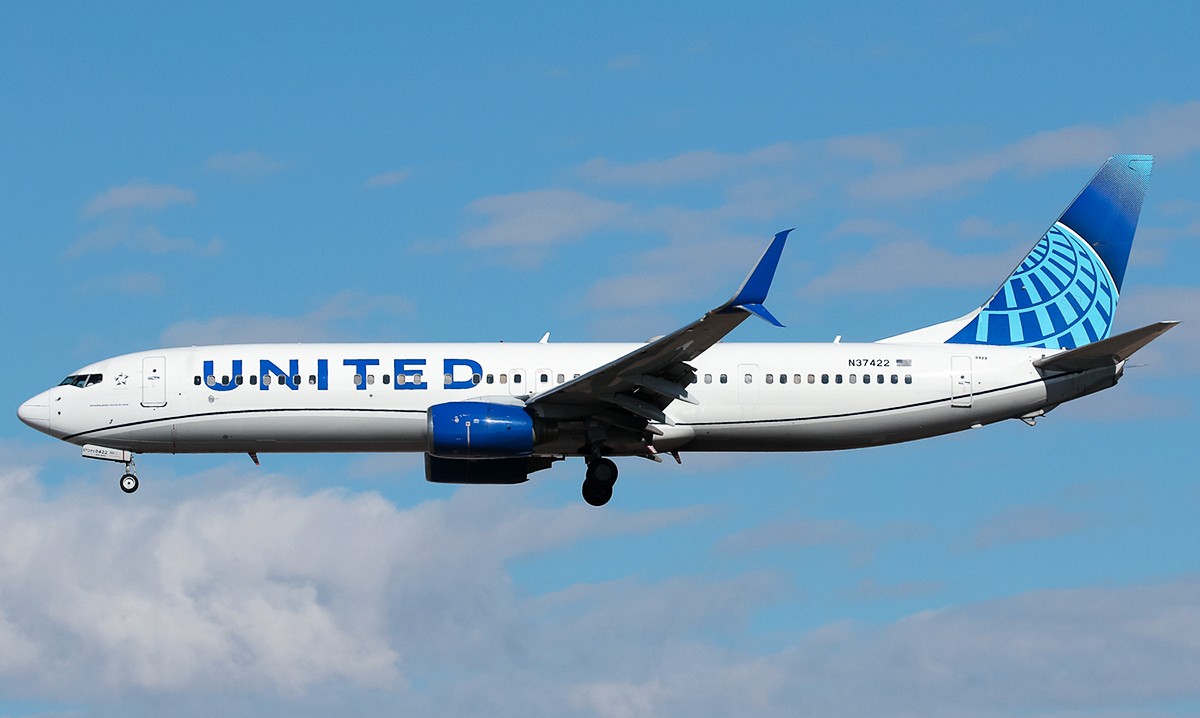
NG • Stretched
The 737-900 entered service in 2001 as the longest 737 NG, stretching the fuselage to seat up to 189 passengers. It targeted high-density domestic and medium-haul routes. The -900ER (Extended Range) followed in 2007 with extra fuel and optional exits, making the platform even more flexible for airlines like United and Lion Air.
Passengers
177–189
Range
5,963 km
Cruise
M0.78
Engines
CFM56-7B27
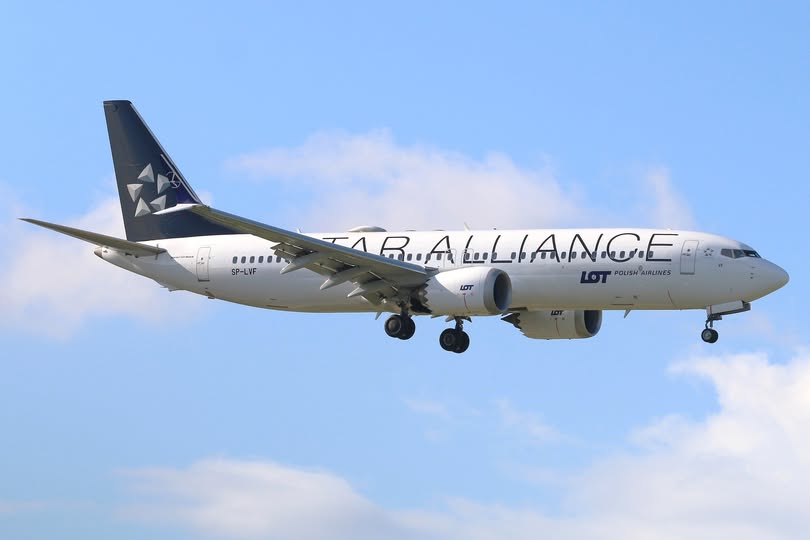
MAX • LEAP Power
Boeing’s answer to the A320neo, the 737 MAX 8 first flew in 2016 and entered service in 2017. It combines the LEAP-1B engine and advanced winglets with a familiar fuselage, cutting fuel burn by double digits versus the 737-800. The type faced a worldwide grounding in 2019–2020 after two accidents; it returned to service with updated software and procedures and now flies for carriers globally.
Passengers
162–210
Range
6,570 km
Cruise
M0.79
Engines
LEAP-1B
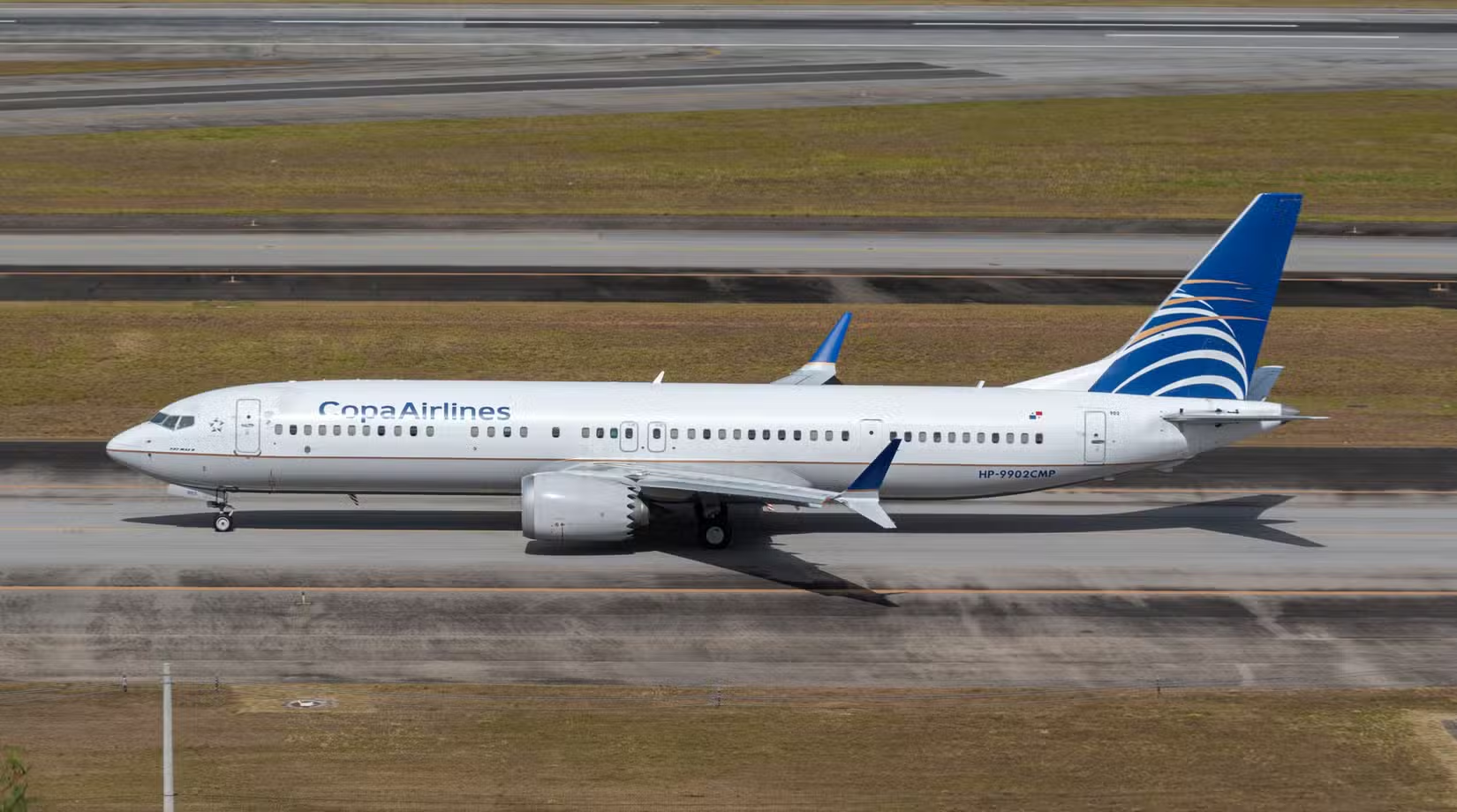
MAX • Stretched
The 737 MAX 9 entered service in 2018, offering a stretched fuselage and 178–220 seats while sharing the MAX 8’s LEAP-1B engines and efficiency gains. It fills the gap between the MAX 8 and the MAX 10 and is popular with airlines that need extra capacity on busy medium-haul routes without stepping up to a widebody.
Passengers
178–220
Range
6,510 km
Cruise
M0.79
Engines
LEAP-1B
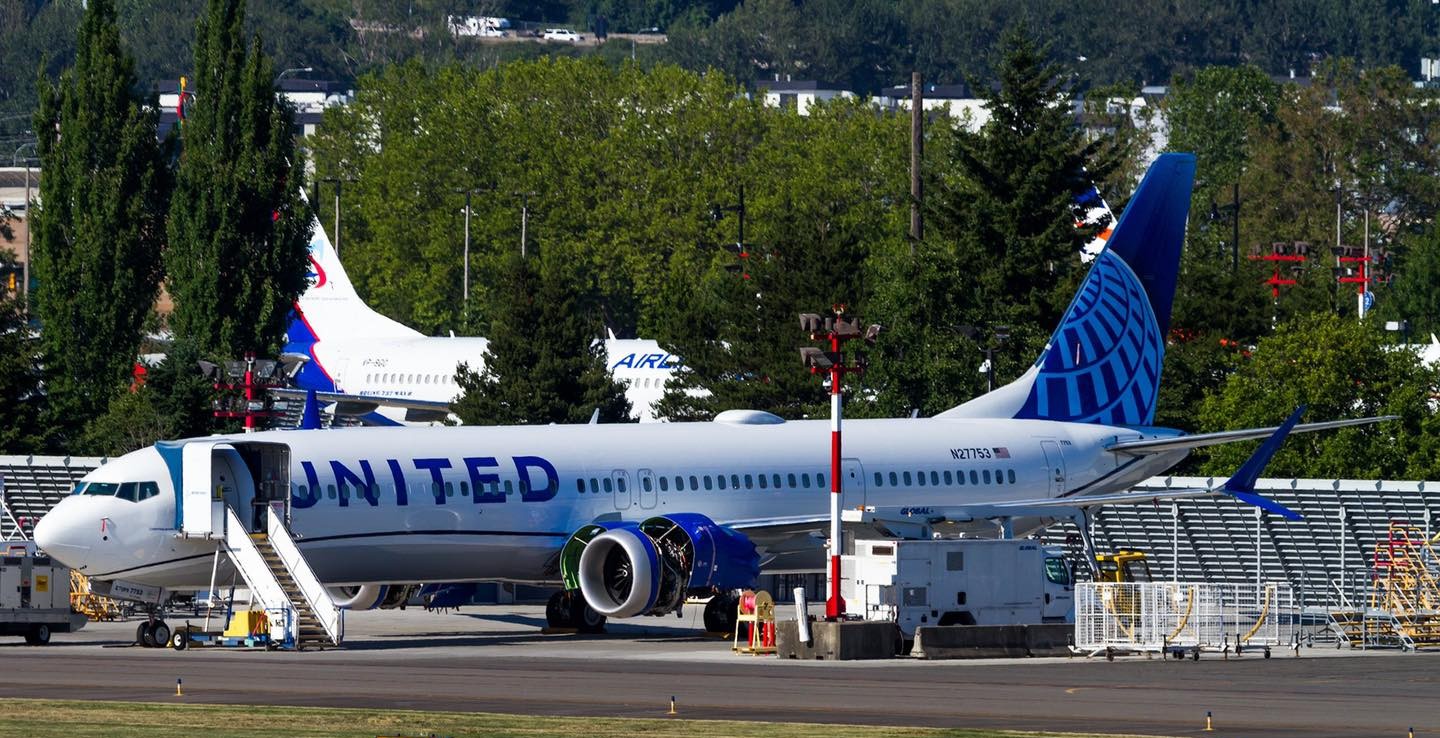
MAX • Longest
The 737 MAX 10 is the longest 737 ever built and began deliveries in 2023. It seats up to 230 in a single-aisle layout and competes directly with the Airbus A321neo for high-density domestic and medium-haul routes. Unique folding wingtips allow it to use the same gate footprint as smaller MAX variants while maximizing wingspan for efficiency.
Passengers
188–230
Range
6,110 km
Cruise
M0.79
Engines
LEAP-1B
CEO • Smallest A320
The A318 entered service in 2003 as the smallest member of the A320 family—often called the “baby bus.” With 107–132 seats and 5,950 km range, it was aimed at regional and thin routes. A standout feature: it was certified for steep approaches into London City Airport. Only about 80 were built, making it a rare and distinctive narrowbody.
Passengers
107–132
Range
5,950 km
Cruise
M0.78
Engines
CFM56-5 / PW6000
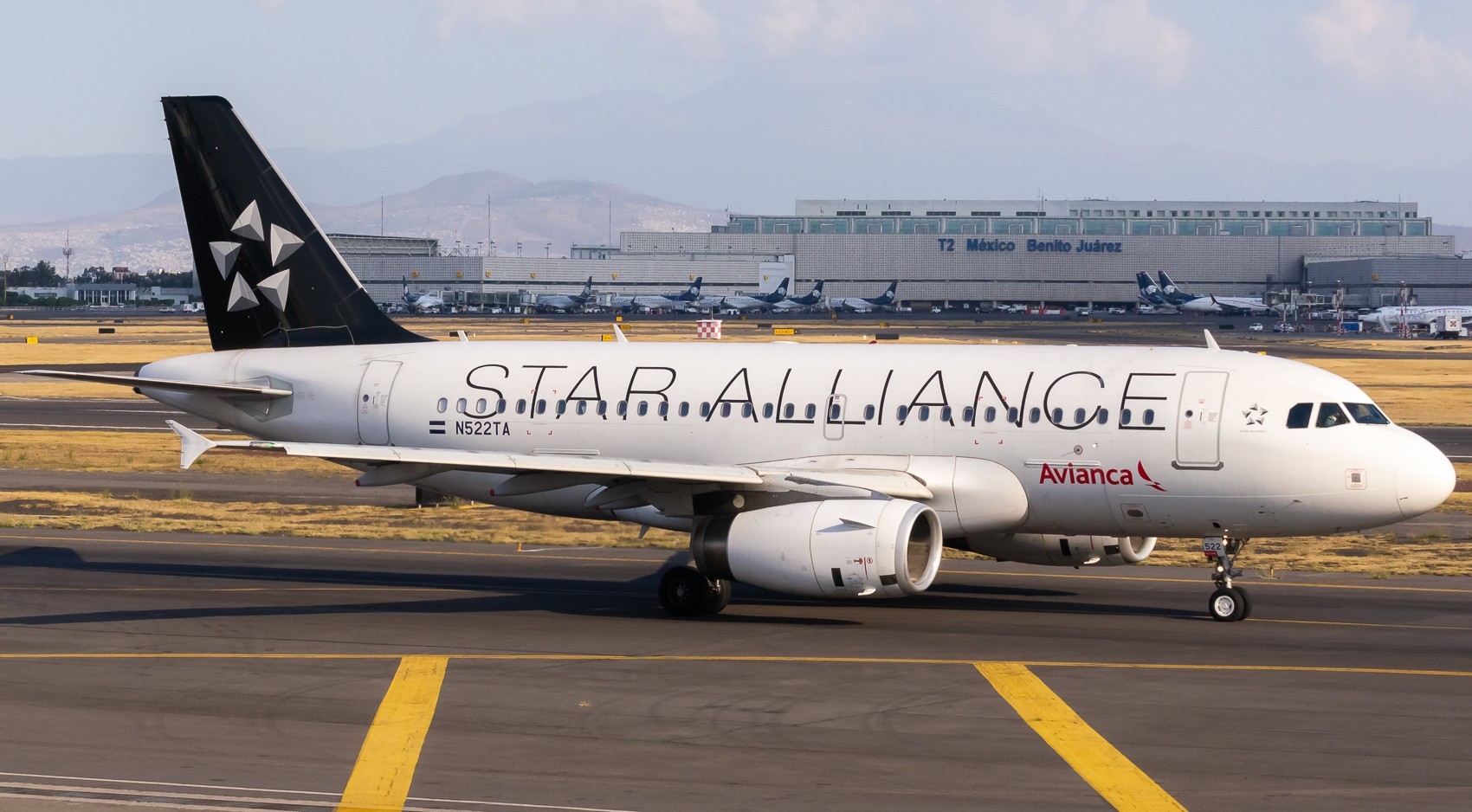
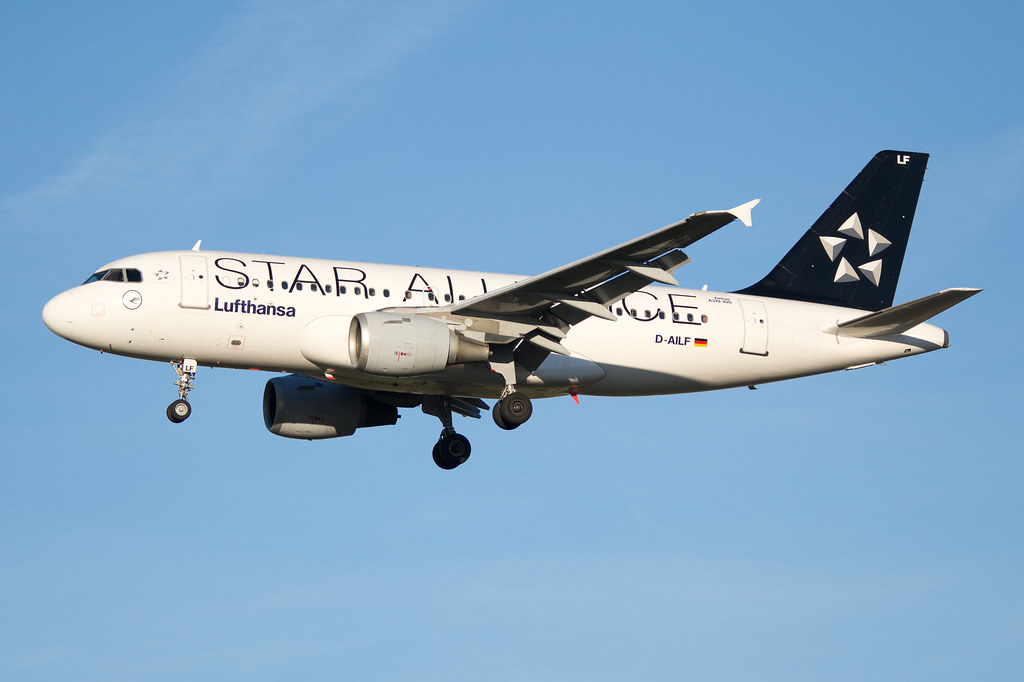
CEO • Short Fuselage
The A319 entered service in 1996 as the shortened version of the A320, seating 124–156 passengers with up to 6,850 km range. It became a workhorse for domestic and medium-haul networks and is also widely used as a corporate or government jet. Several air forces operate it in tanker or transport roles, and it remains in production today as part of the A320ceo family.
Passengers
124–156
Range
6,850 km
Cruise
M0.78
Engines
CFM56-5 / V2500
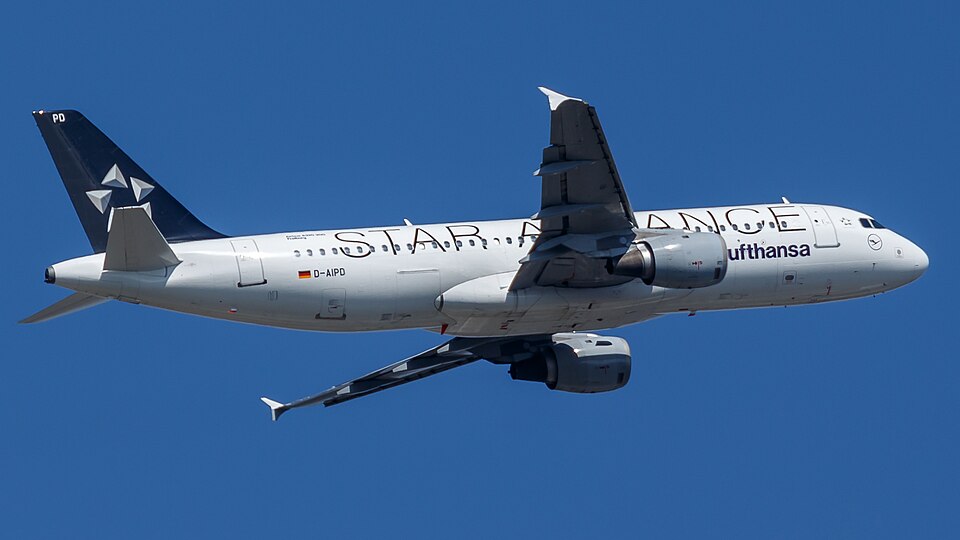
CEO • Standard
The A320-200 entered service in 1988 and helped redefine single-aisle travel with fly-by-wire controls and a wider cabin than the 737. It became the core of the world’s best-selling narrowbody family and sparked the rivalry with Boeing that still defines the market. Thousands of -200s remain in service alongside the newer A320neo.
Passengers
150–180
Range
6,100 km
Cruise
M0.78
Engines
CFM56-5 / V2500
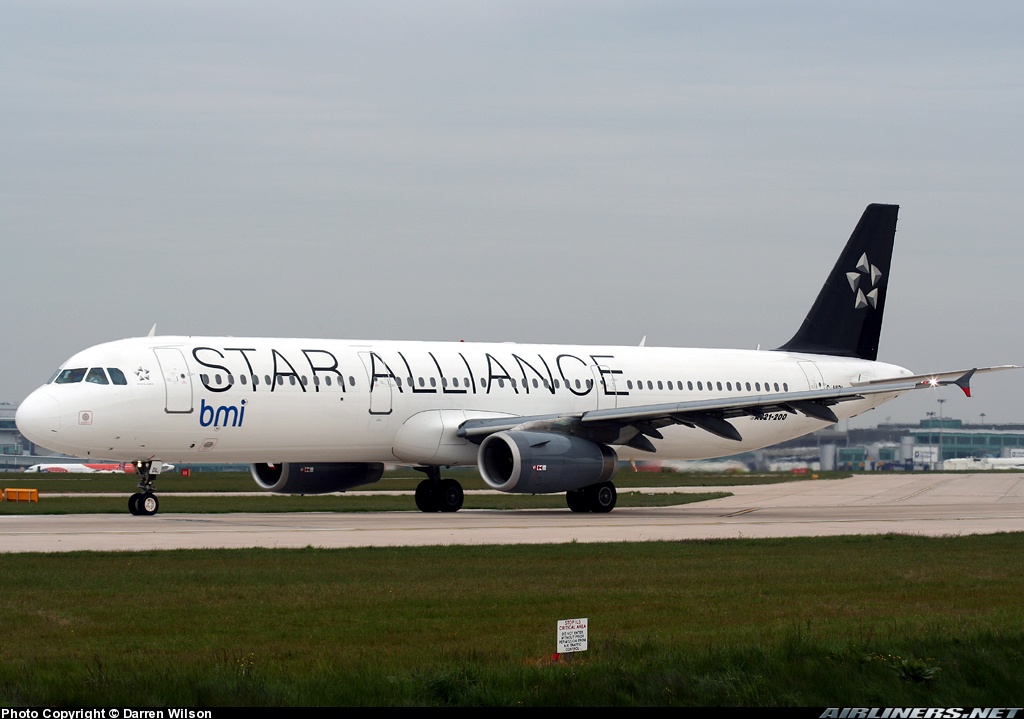
CEO • Stretched
The A321-200 entered service in 1994 as the stretched A320, pushing single-aisle capacity toward 220 seats in high-density layouts. It proved that a narrowbody could handle dense domestic and medium-haul routes without a second aisle. The type laid the groundwork for today’s A321neo, LR, and XLR variants that dominate medium-haul growth.
Passengers
185–220
Range
5,950 km
Cruise
M0.78
Engines
CFM56-5 / V2500
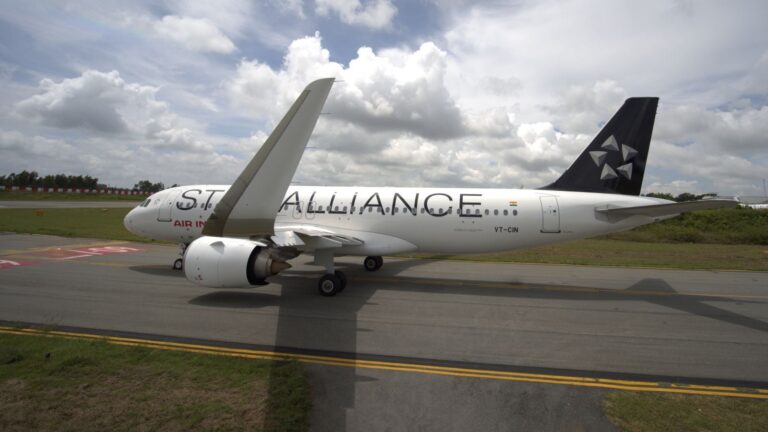
NEO • GTF / LEAP
The A320neo entered service in 2016 with new-engine options—Pratt & Whitney’s PW1127G (GTF) or CFM’s LEAP-1A—plus sharklets, cutting fuel burn by 15–20% versus the original A320ceo. It quickly became the default choice for airlines renewing their single-aisle fleets and has outsold the 737 MAX in orders, defining the current generation of narrowbody travel.
Passengers
165–194
Range
6,500 km
Cruise
M0.78
Engines
PW1127G / LEAP-1A
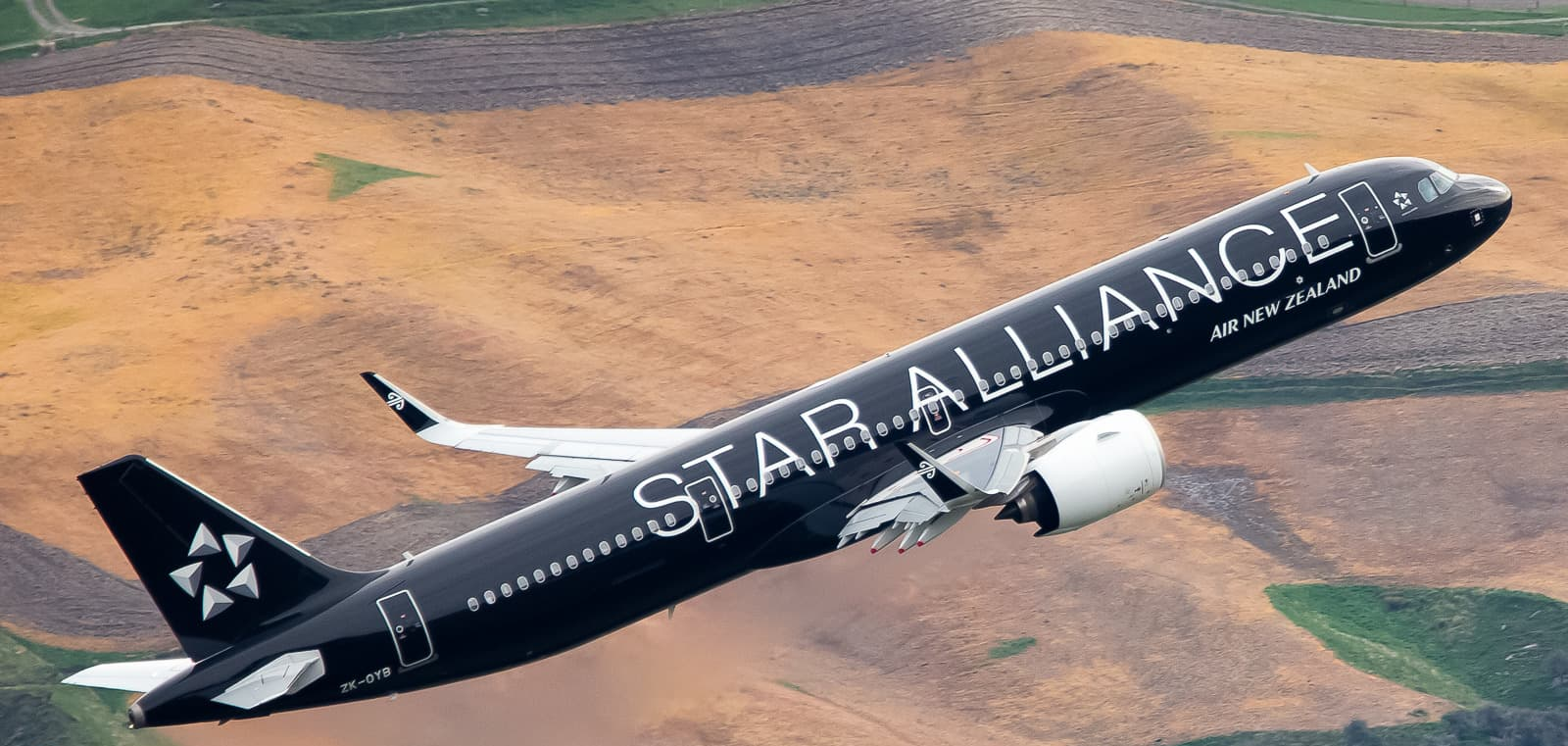
NEO • Stretched
The A321neo entered service in 2017 and has become the dominant high-capacity single-aisle, with 180–220 seats and 6,000 km range. Airlines use it to replace older A321ceos and 757s on busy medium-haul routes. It also forms the base for the long-range LR and extra-long-range XLR, making the A321neo family the most versatile narrowbody in production.
Passengers
180–220
Range
6,000 km
Cruise
M0.78
Engines
PW1133G / LEAP-1A
Long Range • Transatlantic
The A321neo LR entered service in 2018 with 7,400 km range—enough for thin transatlantic routes such as New York–Manchester or Boston–Dublin. Powered by Pratt & Whitney’s GTF, it opened a new market: long-haul point-to-point with a single-aisle. Airlines use it to serve secondary city pairs that don’t justify a widebody.
Passengers
206
Range
7,400 km
Cruise
M0.78
Engines
PW1133G-JM
Extra Long Range
The A321neo XLR entered service in 2023 with a record 8,700 km range—the longest of any single-aisle airliner. It effectively brings “mini widebody” range to a narrowbody, enabling nonstop transatlantic and other long thin routes with lower trip cost than a twin-aisle. The XLR is a key part of airlines’ strategies for point-to-point long-haul.
Passengers
180–220
Range
8,700 km
Cruise
M0.78
Engines
P&W GTF
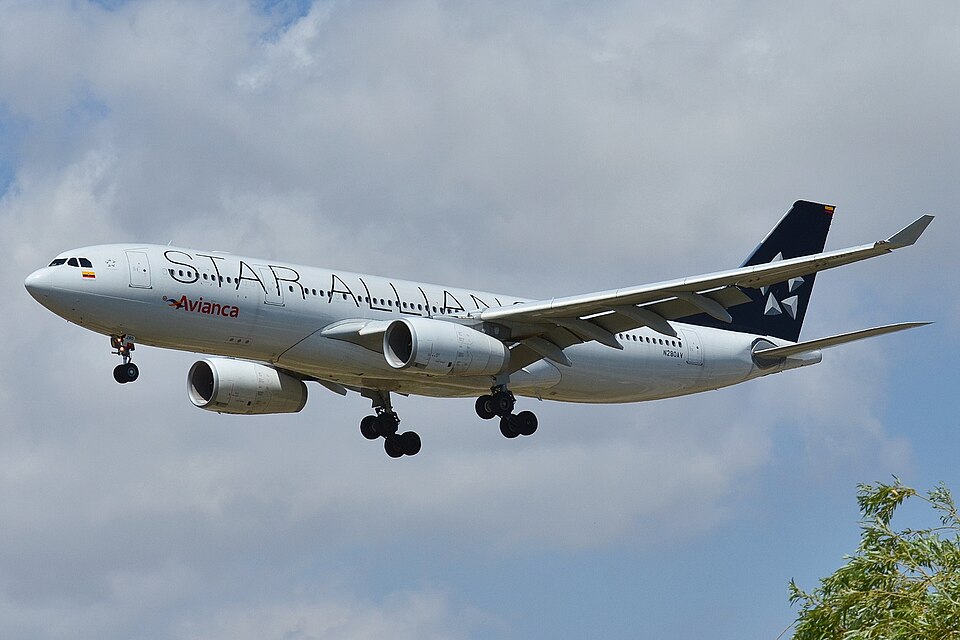
CEO • Extended Range
The A330-200 entered service in 1998 as the shorter, longer-range sibling of the A330-300. With 13,450 km range and 246–406 seats, it was designed for ultra long-haul and thin long-haul routes where the -300 was too big. It became a favorite for airlines like Emirates, Qantas, and many others on marathon sectors such as Dubai–Sydney or London–Perth.
Passengers
246–406
Range
13,450 km
Cruise
M0.82
Engines
Trent 772B / PW4168
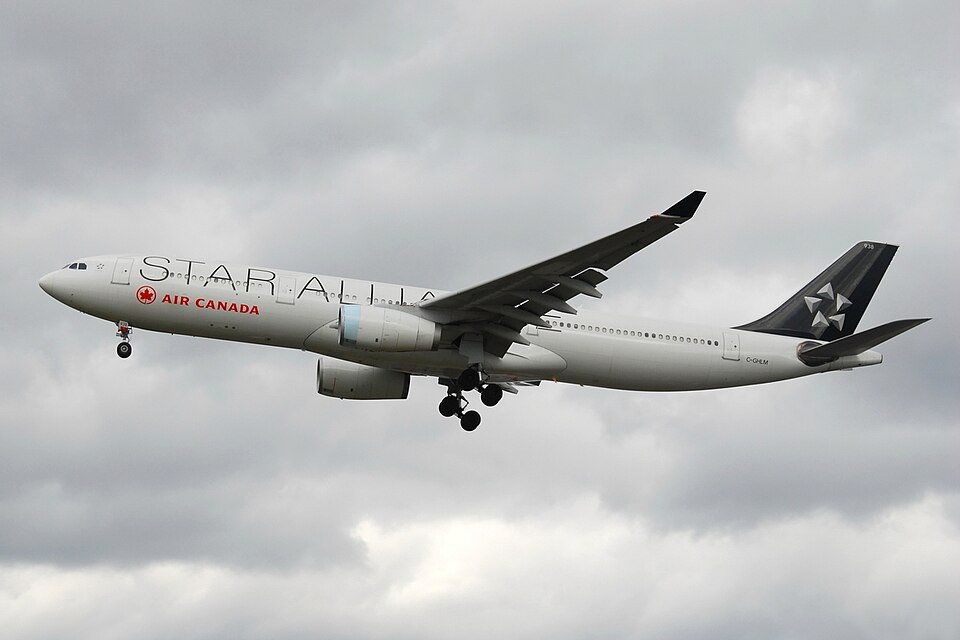
CEO • High Capacity
The A330-300 was the first A330 variant, entering service in 1994. It helped establish the twin-engine widebody as the replacement for tri-jets on medium- and long-haul routes. More than 1,500 -300s have been built; it remains a classic workhorse for full-service and leisure carriers, with 277–440 seats and 11,750 km range.
Passengers
277–440
Range
11,750 km
Cruise
M0.82
Engines
Trent 772 / PW4168
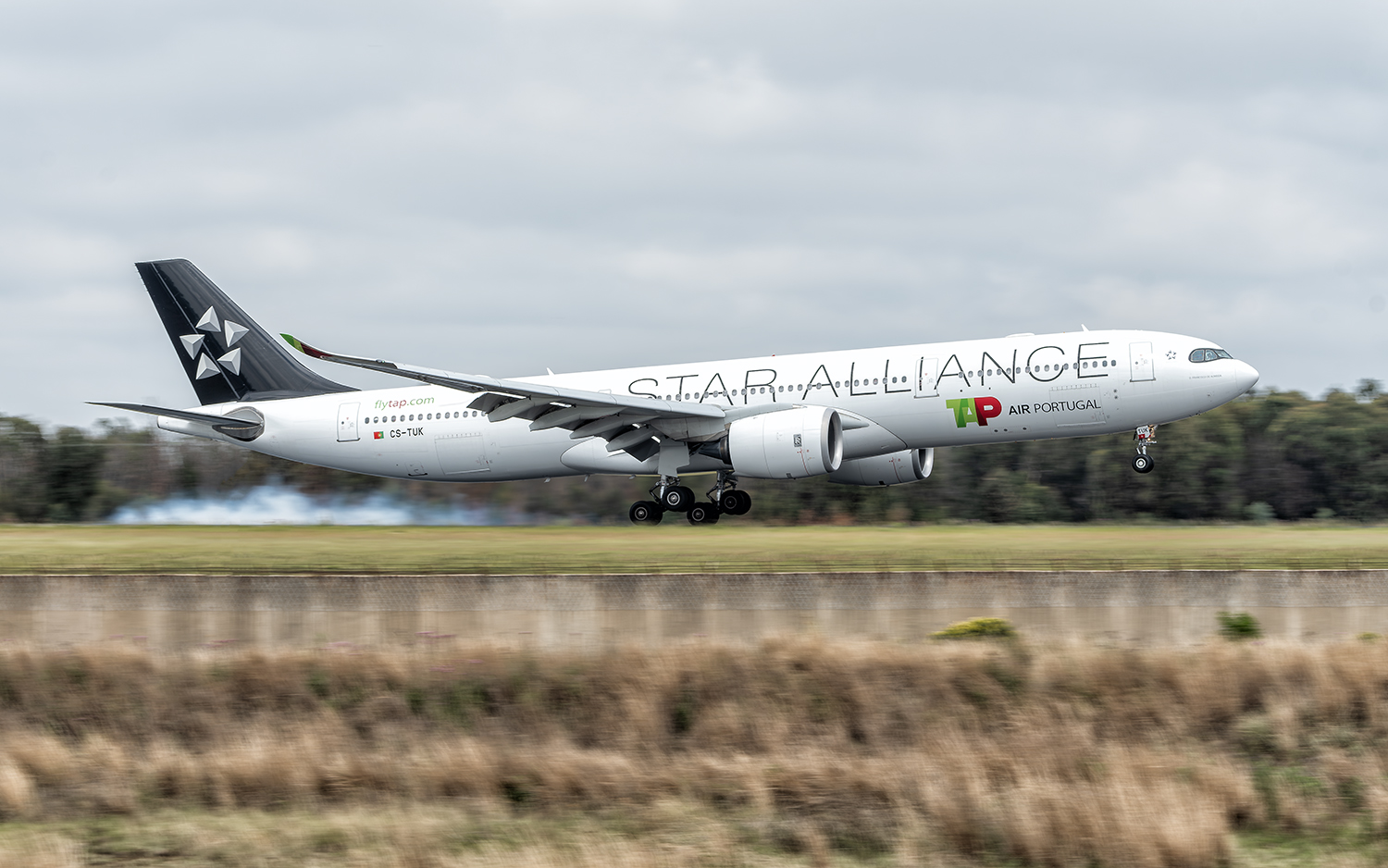
NEO • High Capacity
The A330-900neo entered service in 2018 as the main member of the A330neo family. It combines a new wing, aerodynamic refinements, and Rolls-Royce Trent 7000 engines to cut fuel burn by about 25% versus the A330-300. With 287–440 seats and 13,334 km range, it is the modern replacement for the classic -300 and a key widebody for medium- and long-haul networks.
Passengers
287–440
Range
13,334 km
Cruise
M0.82
Engines
Trent 7000
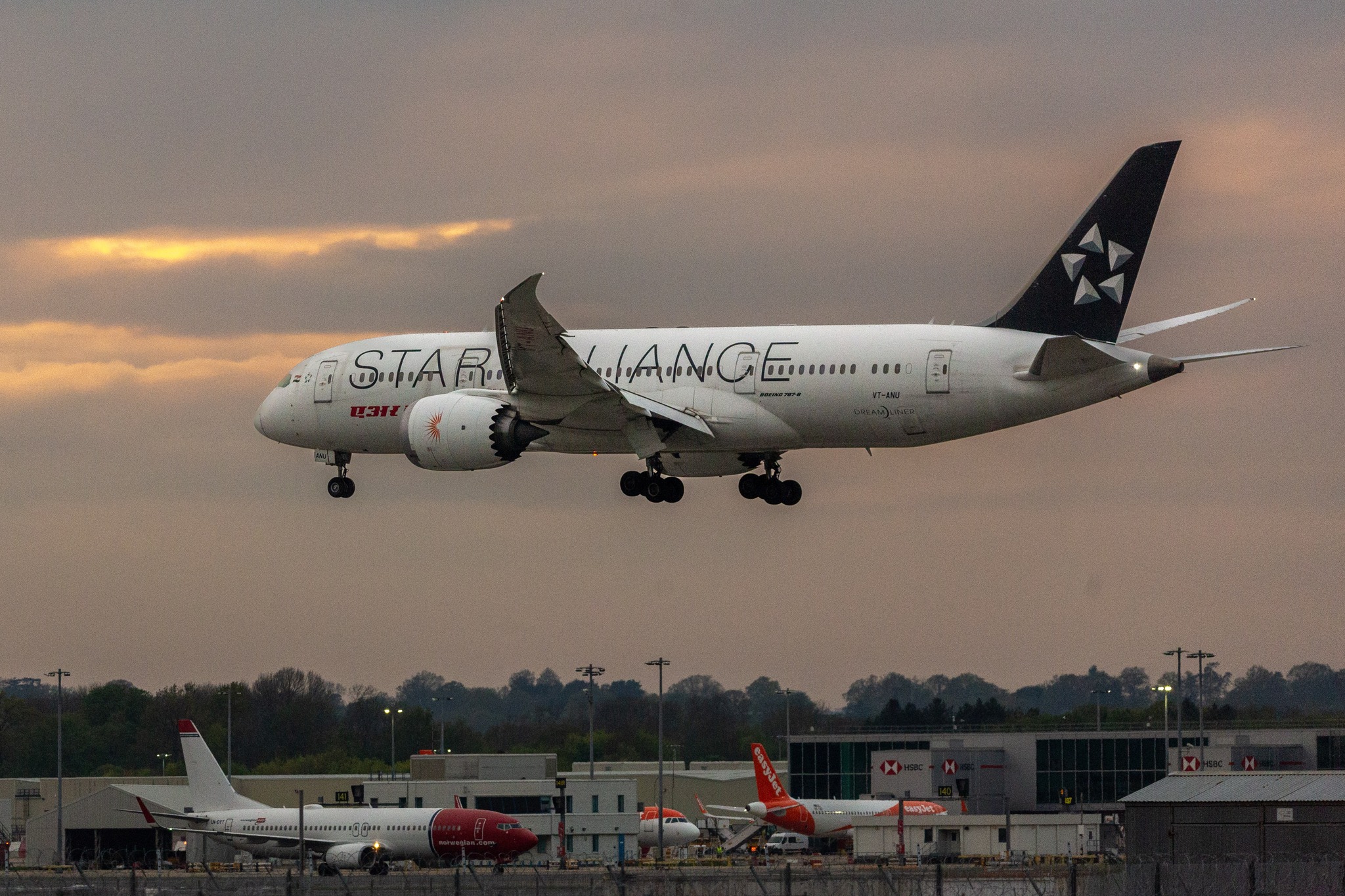
Dreamliner • Baseline
The 787-8 entered service in 2011 as the first Dreamliner. It introduced composite construction, raked wingtips, and efficient GEnx or Trent 1000 engines for 15,750 km range with 242–296 seats. Used extensively by Air Canada, United, ANA, and Ethiopian for long-haul and ultra long-haul routes.
Passengers
242–296
Range
15,750 km
Cruise
M0.85
Engines
GEnx / Trent 1000
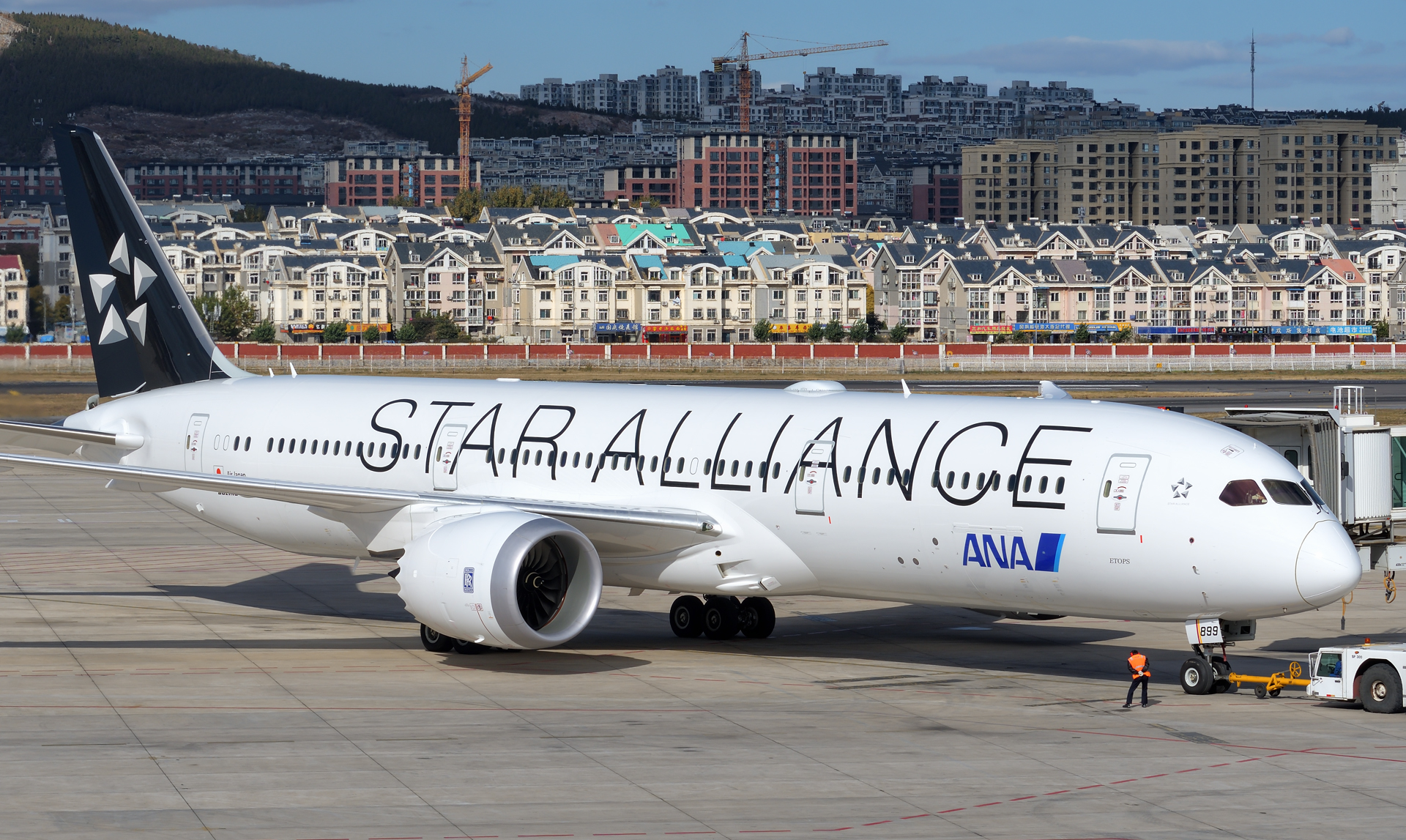
Dreamliner • Stretched
The 787-9 entered service in 2014 with a longer fuselage than the -8, seating 296–336 passengers and offering 15,372 km range. It became the best-selling Dreamliner variant and the backbone of long-haul fleets for United, Air Canada, ANA, and many Star Alliance carriers.
Passengers
296–336
Range
15,372 km
Cruise
M0.85
Engines
GEnx / Trent 1000
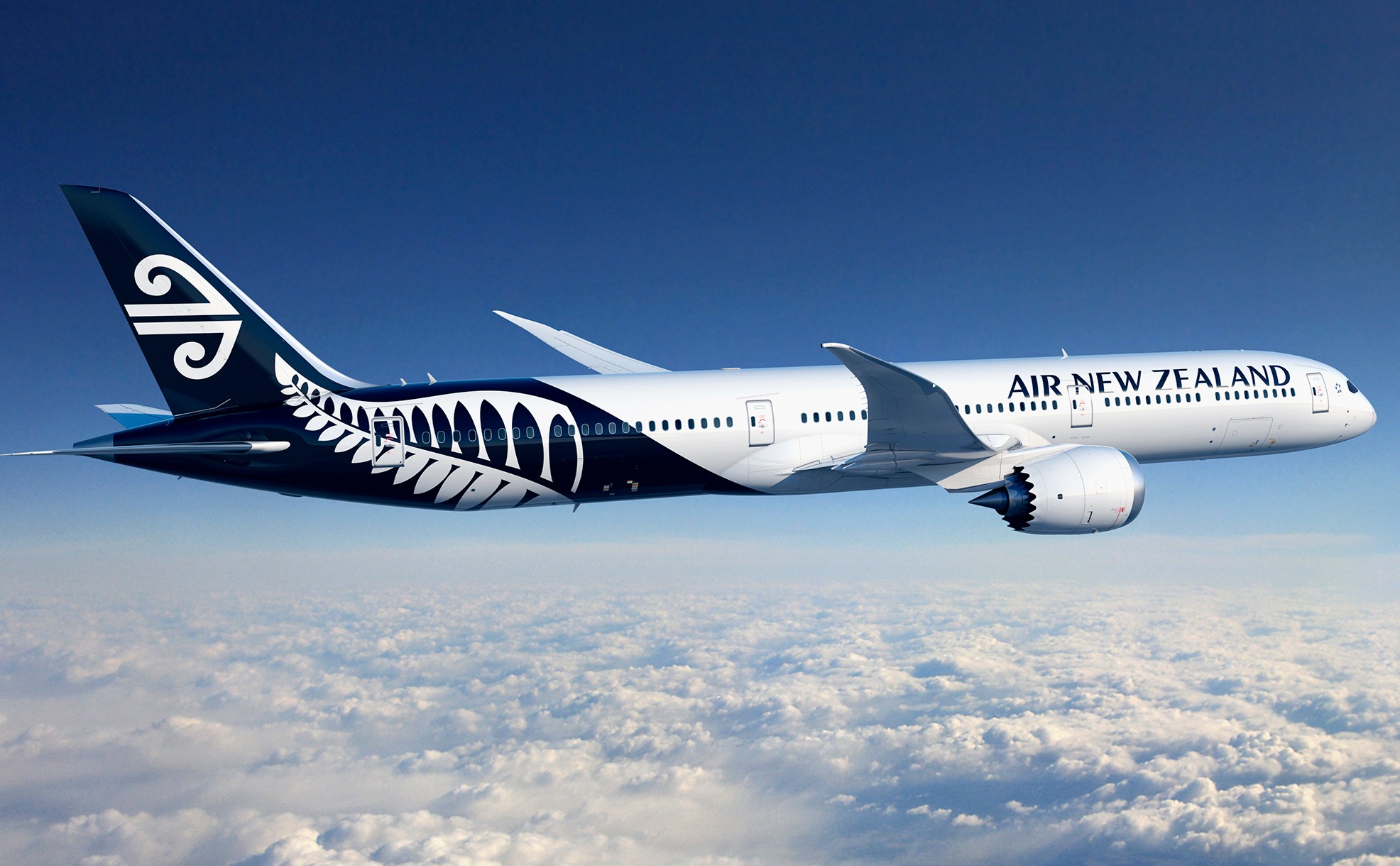
Dreamliner • Longest
The 787-10 entered service in 2018 as the longest Dreamliner, with 330–440 seats and 11,910 km range. It targets high-density long-haul and medium-haul routes where capacity matters more than ultra-long range. United and Singapore Airlines are major operators.
Passengers
330–440
Range
11,910 km
Cruise
M0.85
Engines
GEnx / Trent 1000
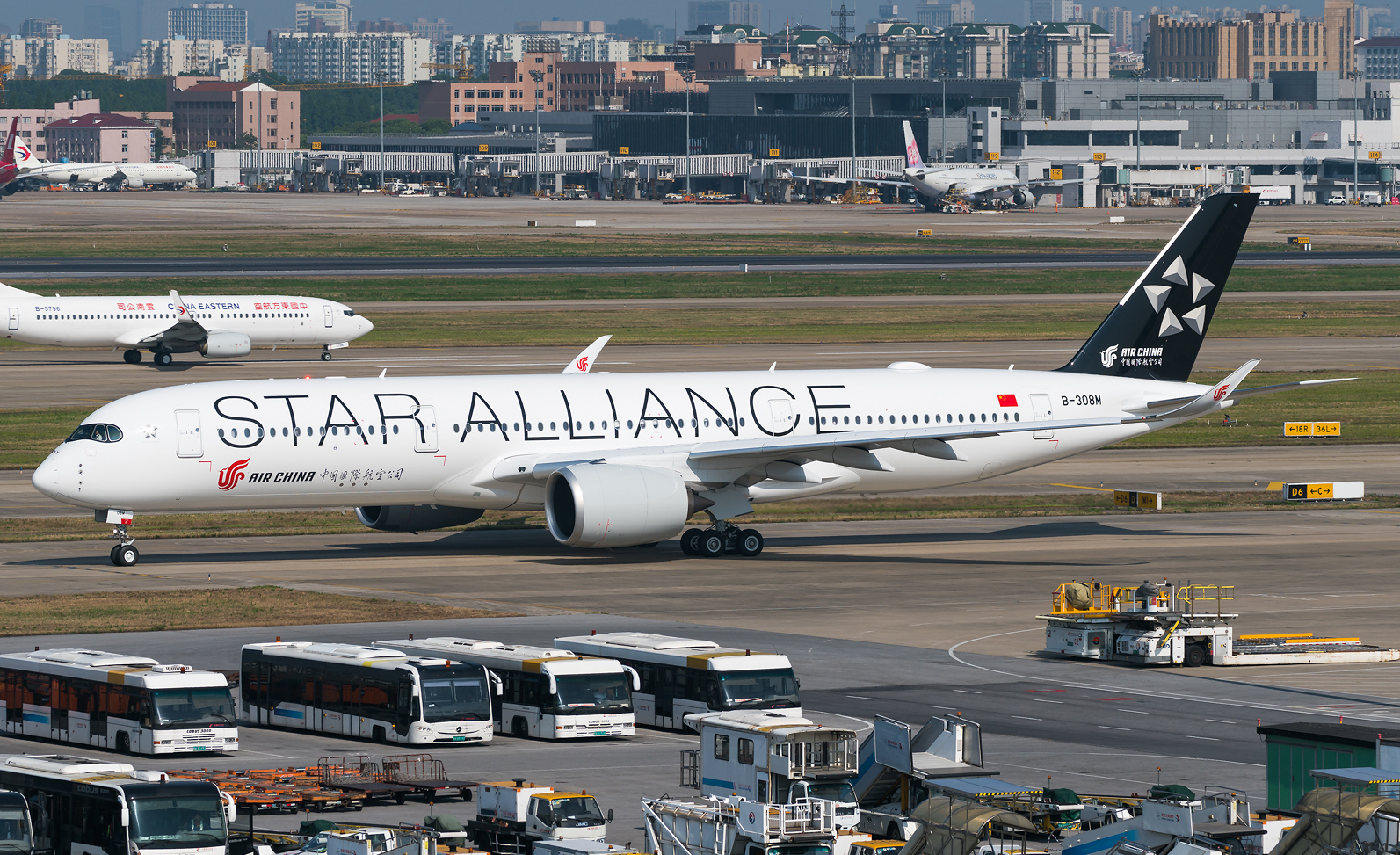
XWB • Long Haul
The A350-900 entered service in 2015 as the first A350 XWB. With 315–366 seats and 15,000 km range, it combines carbon-fibre construction and Rolls-Royce Trent XWB engines. Singapore Airlines operates the world's largest A350 fleet; Lufthansa and Turkish use it as a primary long-haul flagship.
Passengers
315–366
Range
15,000 km
Cruise
M0.85
Engines
Trent XWB
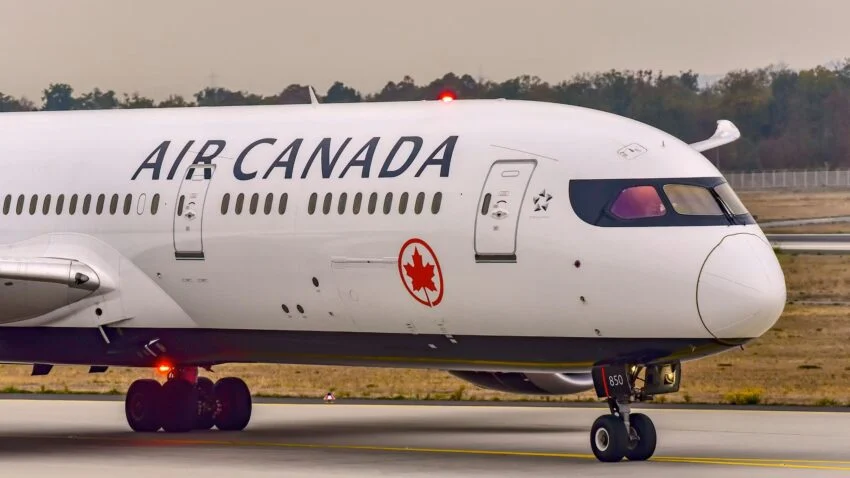
XWB • High Capacity
The A350-1000 entered service in 2018 as the largest A350 variant, with 369–410 seats and 16,100 km range. It competes with the 777-300ER and 777-9 on heavy long-haul routes. Singapore Airlines and other Star Alliance carriers use it for flagship ultra-long-haul services.
Passengers
369–410
Range
16,100 km
Cruise
M0.85
Engines
Trent XWB-97
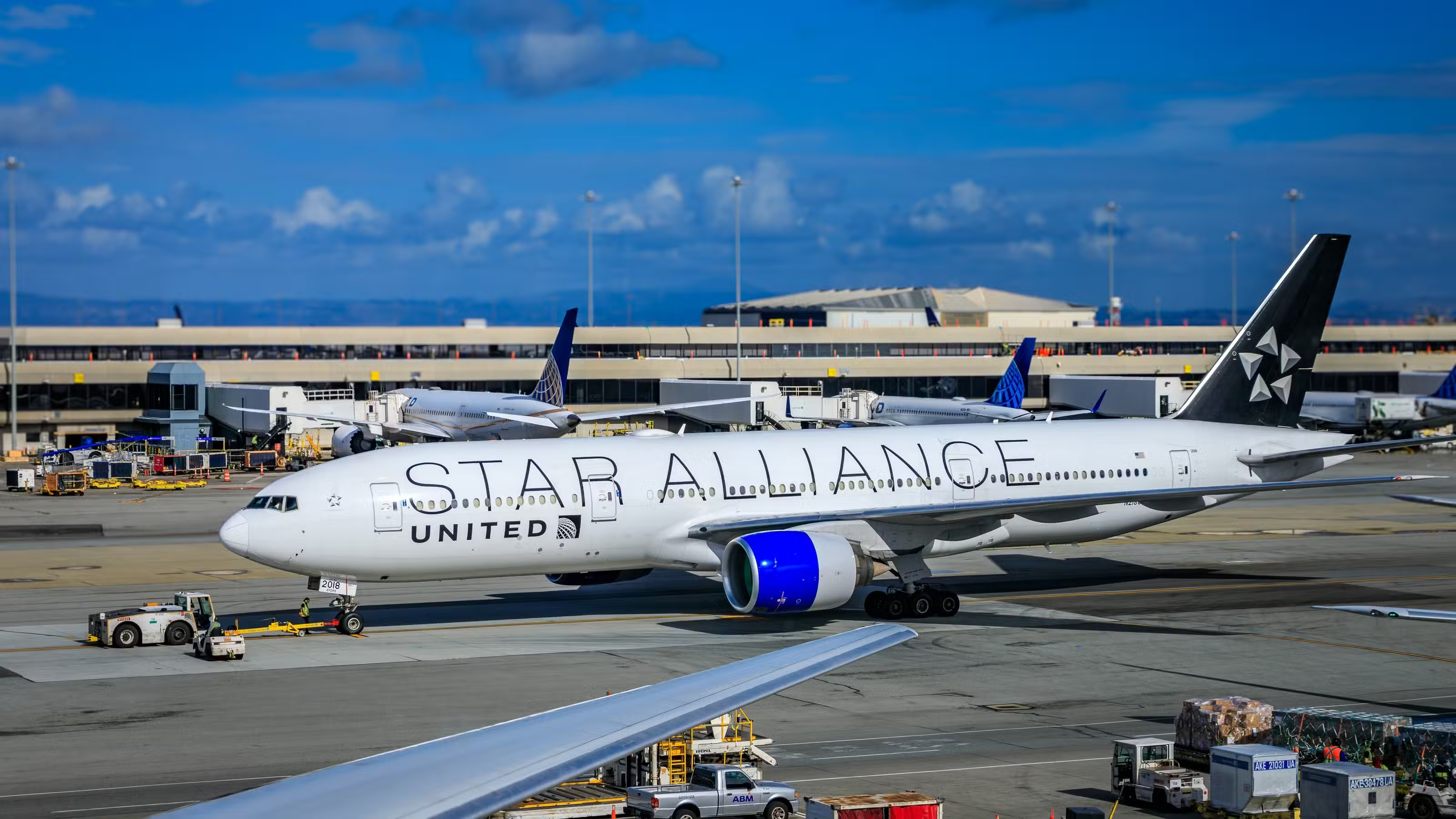
Extended Range
The 777-200ER entered service in 1997, offering 14,305 km range with 305–440 seats. It became a staple for transatlantic and long-haul routes. Many have been retired or converted to freight; remaining examples still serve with United and other carriers on medium- and long-haul sectors.
Passengers
305–440
Range
14,305 km
Cruise
M0.84
Engines
GE90 / Trent 800 / PW4000
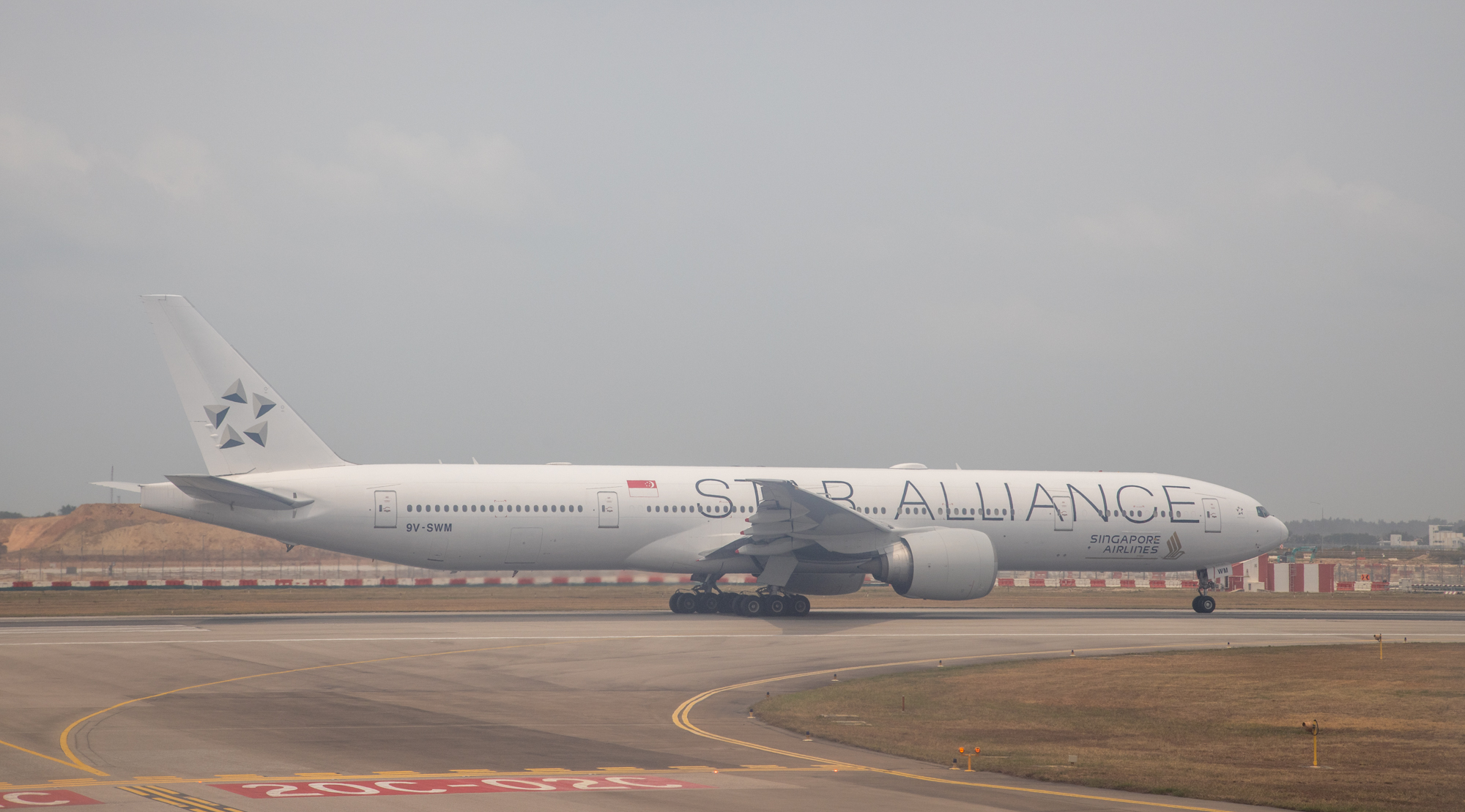
Heavy • Long Haul
The 777-300ER entered service in 2004 and remains a staple for heavy-capacity long-haul routes. With 396–550 seats and 13,649 km range, it is flown by United, Air China, Turkish, and many Star Alliance carriers on busy intercontinental routes. The GE90-115B is one of the most powerful jet engines ever built.
Passengers
396–550
Range
13,649 km
Cruise
M0.84
Engines
GE90-115B
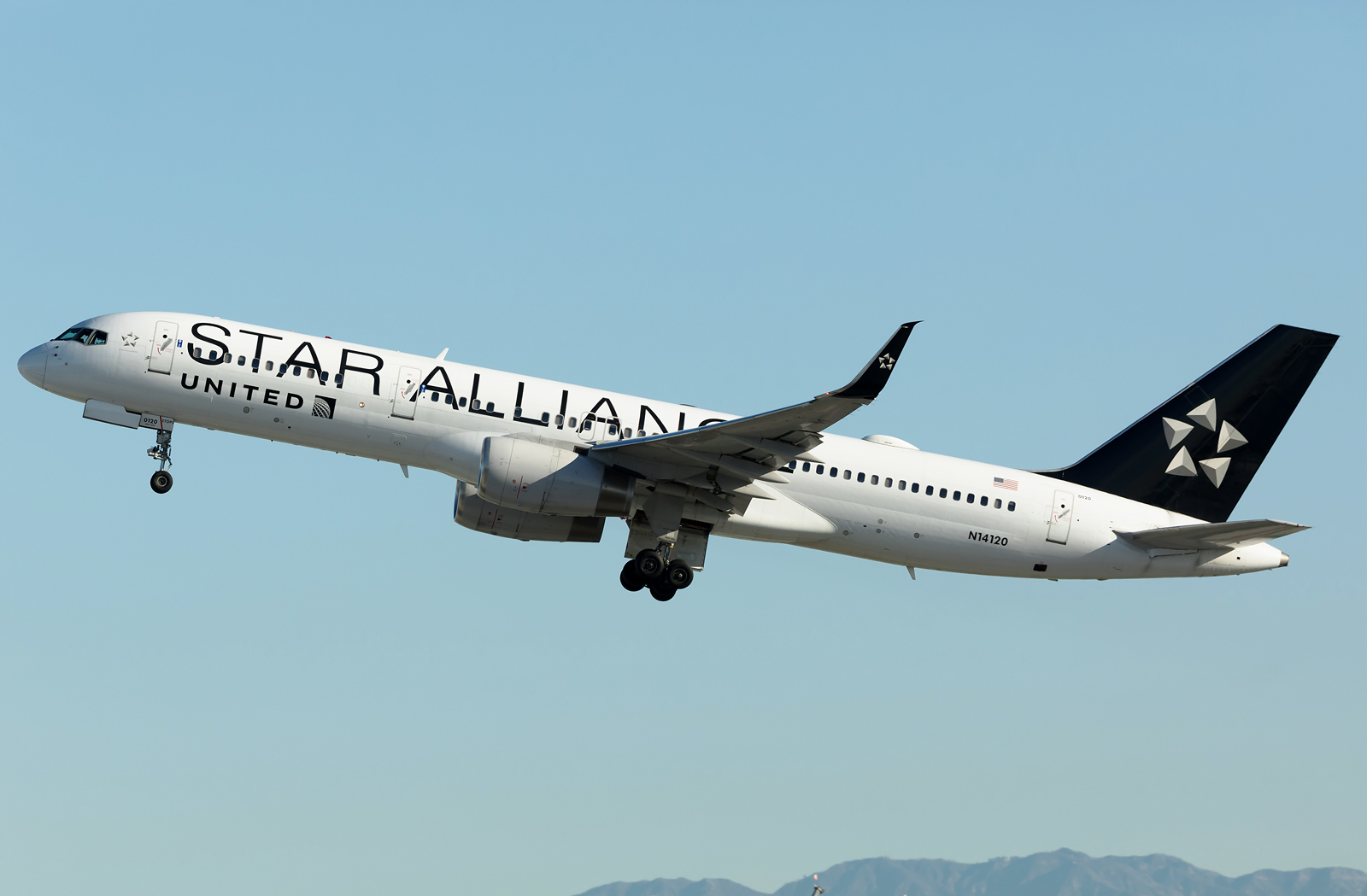
Narrowbody • Extended Range
The 757-200 entered service in 1983 and became a versatile single-aisle with up to 239 seats and 7,222 km range. It filled the gap between the 727 and the 767 and proved capable of transatlantic and thin long-haul routes. United, Delta, and many Star Alliance carriers have operated the 757 on domestic and international sectors.
Passengers
200–239
Range
7,222 km
Cruise
M0.80
Engines
RB211 / PW2000
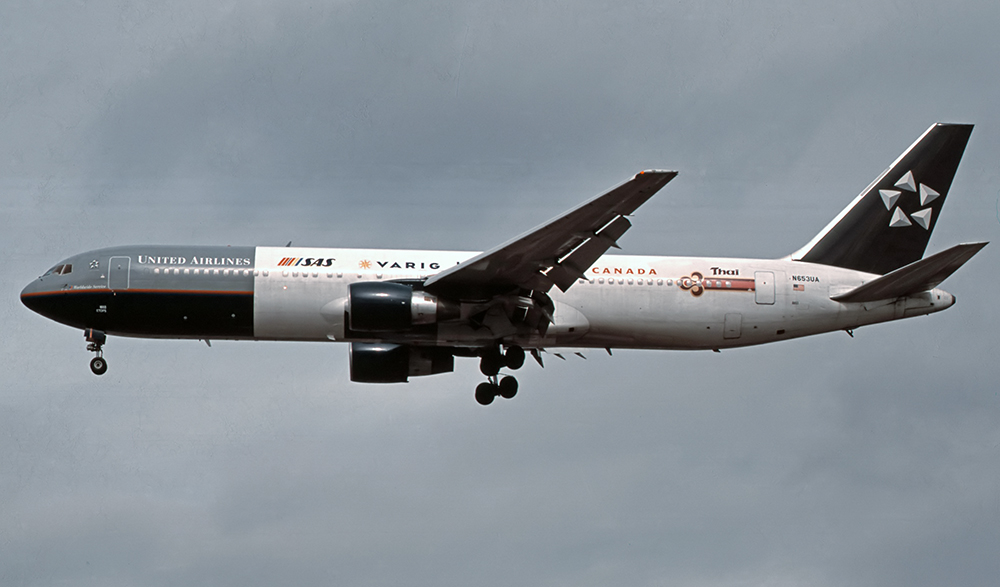
Widebody • Extended Range
The 767-300ER entered service in 1988 and became one of the most successful twin-engine widebodies, with 218–351 seats and 11,065 km range. United, Delta, and Air Canada have been major operators; it remains in service on transatlantic and domestic long-haul routes and is a staple of the Star Alliance network.
Passengers
218–351
Range
11,065 km
Cruise
M0.80
Engines
CF6 / PW4000 / RB211
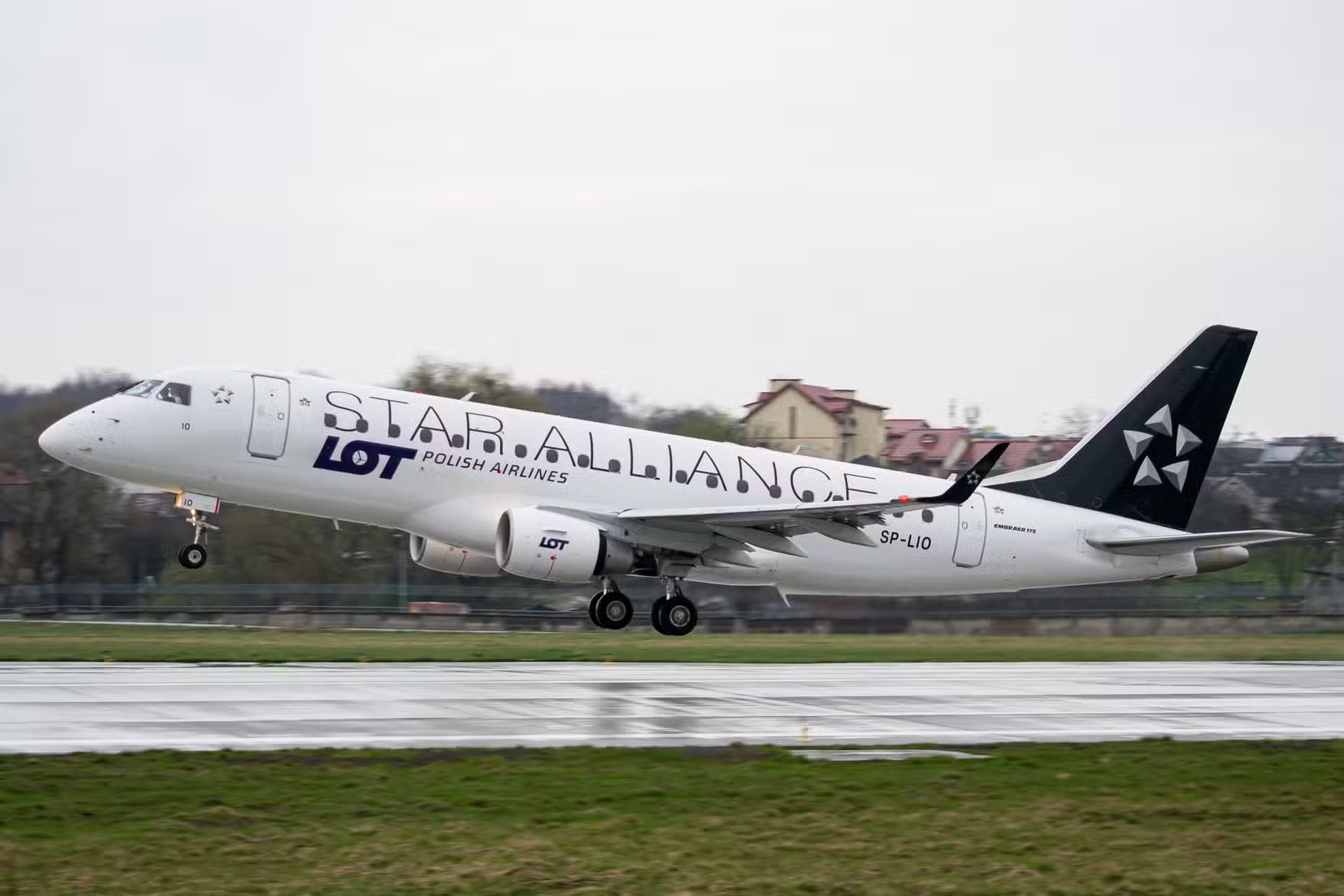
E-Jet • Regional
The E175 entered service in 2005 as part of the E-Jet family. With 76–88 seats and 3,334 km range, it is a mainstay of regional flying for United Express, LOT Polish, and other Star Alliance feeders. It offers a comfortable cabin and scope-clause-friendly capacity for US and European regional networks.
Passengers
76–88
Range
3,334 km
Cruise
M0.78
Engines
GE CF34-8E
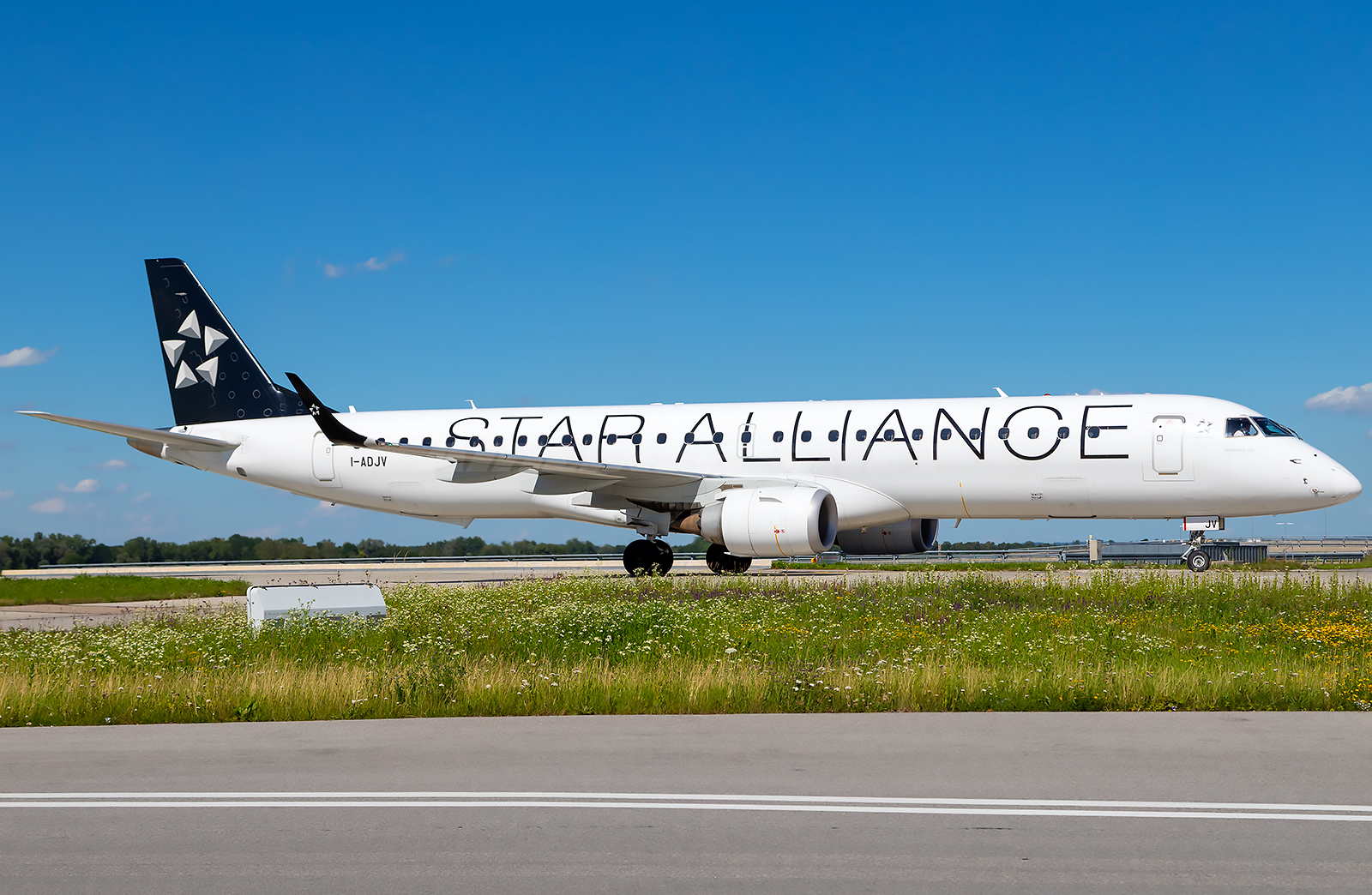
E-Jet • Regional
The E190 entered service in 2005 with 96–114 seats and 4,260 km range. It bridges regional and mainline capacity and is used by LOT Polish, United Express partners, and others. The E190-E2 variant offers improved efficiency for operators renewing their regional fleets.
Passengers
96–114
Range
4,260 km
Cruise
M0.78
Engines
GE CF34-10E
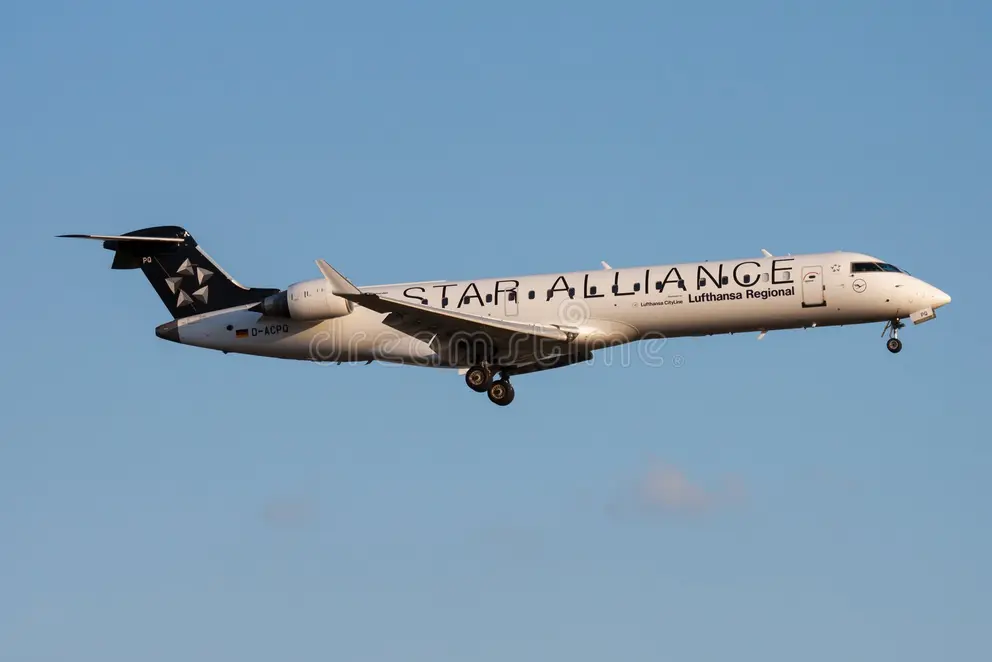
CRJ • Regional
The CRJ700 entered service in 2001 with 66–78 seats and 3,648 km range. It is used heavily by Lufthansa CityLine and regional feeders in North America. The CRJ Series became one of the most successful regional jet families, with a distinctive long, thin fuselage and rear-mounted engines.
Passengers
66–78
Range
3,648 km
Cruise
M0.80
Engines
GE CF34-8C5
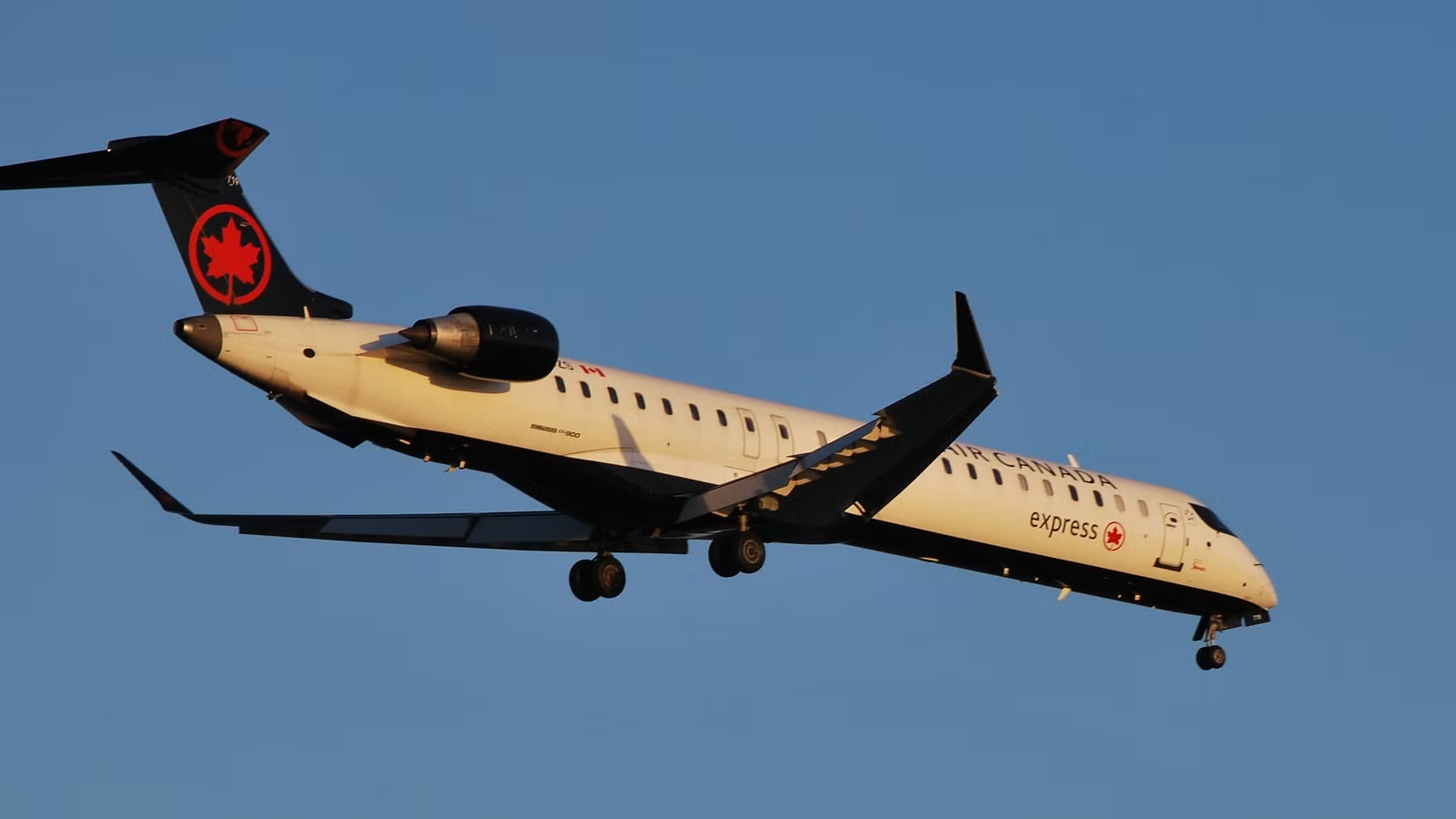
CRJ • Regional
The CRJ900 entered service in 2003 with 76–90 seats and 3,648 km range. The stretched CRJ is used by Lufthansa CityLine and other regional feeders in the Star Alliance network. It offers mainline-style capacity on thin regional routes with lower operating cost than narrowbody jets.
Passengers
76–90
Range
3,648 km
Cruise
M0.80
Engines
GE CF34-8C5
Join Virtual Star Alliance—connect with the world. Whether you're a veteran captain or a new cadet, there's a seat for you. Fly everywhere.